TCXM v Minister for Immigration and Citizenship
On 6 May 2026, the High Court handed down the decision of TCXM v Minister for Immigration and Citizenship [2026] HCA 13.
Background
TCXM is an unlawful non-citizen who has lived in Australia since 1990. The Commonwealth of Australia (Commonwealth) was unable to remove him to Iran because of protection obligations owed to TCXM. Instead, they proposed to remove TCXM to Nauru under s 198(2B) of the Migration Act 1958 (Cth)(Act).
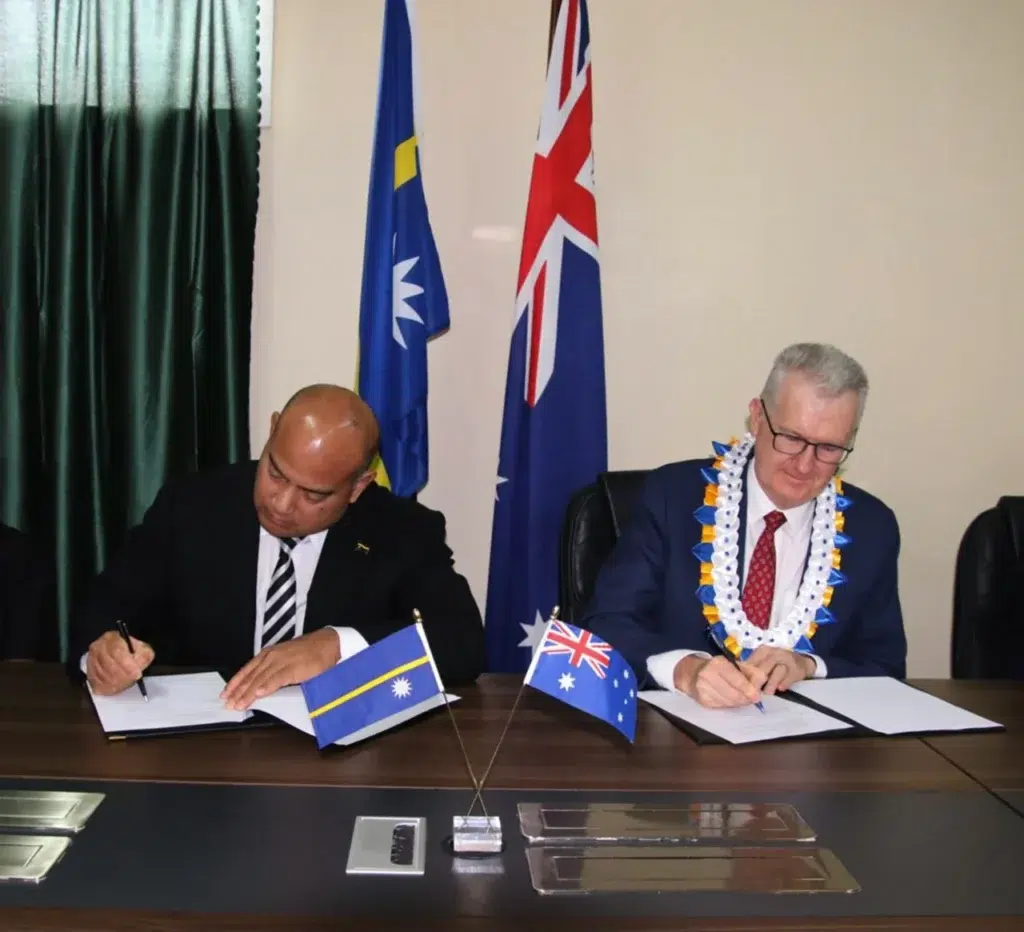
To facilitate this, the Commonwealth entered into an interim third country reception arrangement with Nauru on 12 February 2025 which allowed up to 3 individuals (including TCXM) to be removed from Australia and given visas to live in Nauru permanently. This agreement was later formalised to allow for further removals. On 14 February 2025, the Commonwealth applied for a ‘long term stay visa’ for TCXM to live in Nauru. On 15 February 2025, Nauru issued a long term stay visa to TCXM and the Minister for Immigration and Citizenship notified that TCXM’s Bridging Visa R had ceased to be in effect immediately. On 16 February 2025, TCXM was taken into immigration detention. The Commonwealth planned to remove TCXM to Nauru on 24 February 2025.
On 21 February 2025, TCXM filed an injunction application with the Federal Court to stop him from being removed to Nauru. This application was dismissed, however, he filed a similar application again which was ultimately transferred to the High Court to be determined.
This case will have implications for other individuals that the Government intends to remove to Nauru.
What is this case about?
The High Court considered three issues in TCXM:
- Did the Commonwealth fail to act fairly to TCXM, making it unlawful for the Commonwealth to enter into the interim third country arrangement with Nauru?
- Can an officer remove TCXM “as soon as reasonably practicable” under s 198(2B) of the Act if he faces an imminent risk of harm or death? In TCXM’s case, this was the potential of having a fatal asthma attack.
- If TCXM faces an imminent risk of harm or death, is removing him to Nauru under s 198(2B) of the Act outside the government’s power?
High Court Decision
Did the Commonwealth fail to provide procedural fairness to TCXM, making it unlawful for the Commonwealth to enter into the interim third country arrangement with Nauru?
The High Court decided that the Commonwealth was not obligated to provide procedural fairness to TCXM when they entered into an interim third country arrangement with Nauru in February 2025. This is because of s 198AHAA of the Act, which states that “the rules of natural justice” do not apply in relation to entering an interim third country reception arrangement.
Notably, s 198AHAA was inserted into the Act approximately seven months after the Commonwealth entered into the interim third country arrangement with Nauru. Section 198AHAA of the Act was inserted into the Act due to the Home Affairs Legislation Amendment (2025 Measures No. 1) Act 2025 (Amending Act). However, the Amending Act explicitly provides that the insertion of s 198AHAA of the Act applies retroactively.
Can an officer remove TCXM “as soon as reasonably practicable” under s 198(2B) of the Act if he faces an imminent risk of harm or death?
The High Court found an officer can remove TCXM to Nauru even if he faces an imminent risk of premature death from a fatal asthma attack.
The High Court considered the scope of what was “reasonably practicable” as worded in s 198(2B) of the Act. They found that a medical condition which prevents a person from travelling to a country can be assessed as not “reasonably practicable.” However, this does not extend to considering what can be expected to happen to the person and their health after they are removed to Nauru.
The High Court found that this is not a new position and follows on from the ‘settled position’ in the case of NATB v Minister for Immigration and Multicultural and Indigenous Affairs (2003) 133 FCR 506 (NATB). In NATB, when considering what is “reasonably practicable” in s 198 of the Act, an officer does not need to account for “what is likely or even virtually certain, to befall” a person after their removal is completed.
The High Court referred to the Federal Court in NATB which explained that the Act does not ignore the possibility of a person facing death, torture or persecution if removed. The Act considers the possibility of this because it provides the Minister with personal powers to intervene on behalf of a person who may be removed.
If TCXM faces an imminent risk of harm or death, is removing him to Nauru under s 198(2B) of the Act a punitive act that is outside the government’s power?
Under Chapter III of the Constitution, the government cannot make decisions that punish a person as that power is reserved for the courts.
The High Court found that it is within the government’s power to remove TCXM to Nauru, even if he faces an imminent risk of harm or death as this is not an act of punishment. Even when considered against other matters such as TCXM’s “confinement” or “banishment” to Nauru (as argued by TCXM) – the High Court found that none of these matters considered separately or together are punitive acts.
The High Court ultimately found that the risk of harm or premature death in Nauru is due to the inadequate medical services in Nauru and not enough to be considered punishment by the government. As a result, it is within the government’s power to remove TCXM, even if he faces an imminent risk of harm or death.
What does this mean for ASRC clients and other people facing removal to Nauru?
The main cohort facing removal to Nauru are people who are affected by the High Court decision in NZYQ v Minister for Immigration, Citizenship and Multicultural Affairs & Anor [2023] HCA 37 (NZYQ). Namely, these are people who hold Bridging Visa Rs who would have been held in immigration detention indefinitely – except that indefinite detention was held to be unlawful in NZYQ on 8 November 2023.
We encourage any person who is affected by the NZYQ decision or who has received a notice for removal to Nauru from the Department to seek urgent legal advice to see what options are available to them.
The legal sector is currently reviewing options on how to respond to the TCXM decision.
If you are in Victoria, you can get legal help here: https://asrc.org.au/wp-content/uploads/2026/03/ASRC-Legal-Referral-Sheet-Victoria-March-2026.docx.pdf
If you are in other states, you can get legal help here: https://asrc.org.au/wp-content/uploads/2023/06/INFO-SHEET-Immigration-law-referral-sheet-Interstate.pdf
You can also contact ASRC Legal by phone on Monday, Tuesday and Thursday between 10:00am-12:30pm on (03) 9274 9889 or ASRC at (03) 9326 6066.
1 – Statement on Nauru MOU, 29 August 2025, https://minister.homeaffairs.gov.au/TonyBurke/Pages/statement-on-nauru-mou.aspx
2- Procedural fairness means acting fairly when making administrative decisions that affect people. It is about the fairness of the process in making the decision and not the outcome of the decision. Procedural fairness is explained in more detail here: https://www.alrc.gov.au/publication/traditional-rights-and-freedoms-encroachments-by-commonwealth-laws-alrc-report-129/14-procedural-fairness-2/procedural-fairness-the-duty-and-its-content/

Connect with us
Need help from the ASRC? Call 03 9326 6066 or visit us: Mon-Tue-Thur-Fri 10am -4pm. Closed on Wednesdays.